


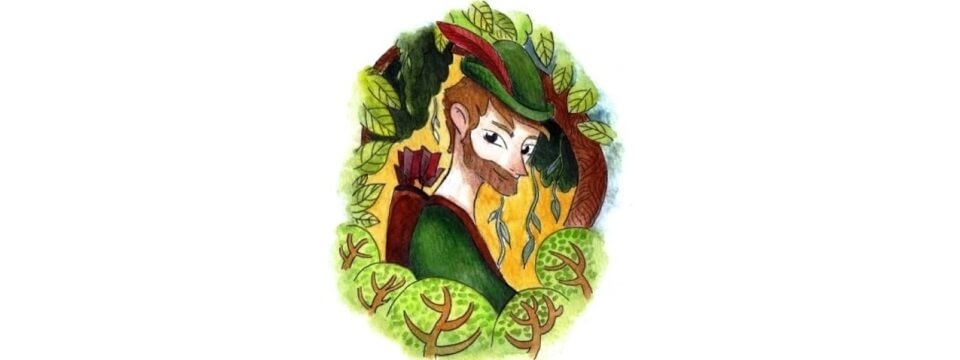
No, Robin Hood did not exist as a real person. In the 13th century, outlaws borrowed the name “Robin Hood,” but these figures resembled little the legendary hero, appearing instead as creations of folklore, a charismatic outlaw who hid in Sherwood Forest, robbing the rich to give to the poor.
A charismatic outlaw hiding in Sherwood Forest, robbing the rich to give to the poor. While this captivating image exists, historians find no evidence that Robin Hood, Maid Marian, Little John, or Friar Tuck ever existed.
Life in the Middle Ages challenged everyone but the upper class, making tales of brave brigands fighting the wealthy resonate with downtrodden peasants. Many consider it merely a story.
For centuries, Robin Hood’s story has enthralled audiences. This clever outlaw and his Merry Men have appeared in books, poems, plays, films, television shows, and video games. Even seven hundred years after his first mention in English literature, his popularity thrives. We delve into his story’s origins, evolution, and the question of his existence.
William Langland’s 14th-century poem ‘Piers Plowman’ offers the earliest mention of Robin Hood. His brief appearance suggests that readers already recognized him as a folk hero before the emergence of his ballads in the Middle Ages.
Some scholars argue that “Robin Hood” served as a generic term for outlaws, supported by evidence from the 1260s with names like “Robehod” and “Robinhood” appearing in justice rolls from Berkshire to York.
The earliest surviving ballad, ‘Robin Hood and the Monk’, composed in the 1450s, introduces key elements, including Nottingham, Sherwood Forest, the Sheriff of Nottingham, and the “Merry Men”—Little John and Much the Miller’s Son.
Following ‘Robin Hood and the Monk’, many stories emerged. During May Day Games, medieval peasants enacted scenes, introducing Maid Marian as his love interest. Ballads like ‘A Guest of Robin Hood’ and ‘Robin Hood and the Sheriff of Nottingham’ added characters like Will Scarlet and Friar Tuck, emphasizing Robin’s preference for cunning and trickery and marking the first mention of his poison-induced death.
In these early ballads, Robin Hood neither steals from the rich to give to the poor nor portrays noble birth—elements that became essential later. In the 15th century, Robin Hood and his Merry Men remained rough brigands motivated by self-interest, depicting Robin as a commoner instead of a nobleman.Tudor times, storytellers elevated Robin Hood to noble status. Anthony Munday’s plays, ‘The Downfall of Robert Earl of Huntingdon’ and ‘The During During Tudor times, storytellers elevated Robin Hood to noble status, first introduced in Anthony Munday’s ‘The Downfall of Robert Earl of Huntingdon’ and ‘The Death of Robert Earl of Huntingdon’ from 1598 and 1601.
This resonated widely, leading to portrayals of him as a nobleman unjustly stripped of his title. Subsequent narratives depicted Robin Hood as a loyal soldier of King Richard I, who fought alongside him in the Crusades, while introducing Prince John as part of the villainous trio: Prince John, the Sheriff of Nottingham, and Sir Guy of Gisborne, who appeared in a children’s story from the 1650s.
The shift from oral storytelling to written accounts occurred during this period, with Broadside Ballads—cheap printed sheets featuring stories and songs—gaining immense popularity. New tales, like Robin Hood’s quarterstaff fight with Little John, enriched the legend. By the 17th century, minstrel Alan-a-Dale joined the Merry Men, thanks to the Broadsides.
In 1795, Joseph Ritson published ‘Robin Hood: A Collection of All the Ancient Poems, Songs, and Ballads Now Extant’, depicting Robin Hood as the altruistic outlaw we cherish today. His generosity resonated deeply, solidifying the image of him robbing from the rich to give to the poor.
The 19th century saw authors adapt the story for children, notably Howard Pyle with ‘The Merry Adventures of Robin Hood’ in 1883. Pyle rejected Robin Hood’s noble lineage but retained many familiar elements, depicting him receiving pardons from Richard the Lionheart—an idea that resurfaced later.
Contributors included Sir Walter Scott and Jaques Thierry, who portrayed Robin as a Saxon resisting corrupt Norman lords, while the Child Ballads featured his famous archery contest—a trap set by the Sheriff. These elements became enduring parts of the legend.
The 20th century ushered in films and television that breathed new life into the Robin Hood story. From 1908’s ‘Robin Hood and His Merry Men’ to Errol Flynn’s ‘The Adventures of Robin Hood’ in 1938, Hollywood embraced Robin Hood’s essence. Douglas Fairbanks, Kevin Costner, and Sean Connery brought new interpretations while Disney recreated him as a charming fox.
Television portrayed Robin Hood for over 70 years, with Richard Greene starring in ‘The Adventures of Robin Hood’ in the 1950s, and Michael Praed and Jason Connery in ‘Robin of Sherwood’ during the 1980s. With a plethora of new books, toys, board games, and video games, Robin Hood’s legend is unlikely to fade into obscurity anytime soon.