


Ultimately, we know little of Captain Cook beyond the myth, legend, and opinions that have formed around him over time.
He was, after all, a man doing his job, which he executed exceptionally well for the most part. As children across Britain and the Antipodes hear again of his valor and heroism, many Hawaiians might still remember the “devil” of Western imperialism and the consequences that followed his voyages.
A seafaring icon
Lieutenant James Cook, a relative newcomer to the naval world, set sail from Whitby on the HMS Endeavour with his 90-man crew, embarking on a quest for Venus and the “southern continent” 250 years ago. This marked the beginning of three transformative expeditions to the South Pacific, culminating in his tragic death. The man who would soon gain the title of “Captain Cook” prepared to change the world.
Captain Cook stands as an icon in our seafaring heritage. People across the UK, Australia, and New Zealand have celebrated the anniversary of his first expedition. He rose to celebrity status during his lifetime and became a legend after his death.
His published journals enthralled the public, offering thrilling tales of perilous travels into unknown realms and cultures. He charted new lands and revolutionized global geography by mapping extensive sections of the Pacific, including New Zealand and Australia.
An eighteenth-century sailor’s bane
For centuries, experts believed he never lost a crew member to scurvy—the notorious bane of eighteenth-century sailors. Some even credited him with curing the disease!
Legend has it that Cook’s crew suffered little from scurvy, with none dying from the disease—a remarkable feat for the time. Yet scurvy tends to cloud judgment, creating a Catch-22 situation. Those afflicted often couldn’t accurately assess their condition, complicating post-voyage evaluations.
Cook reportedly held firm beliefs about the necessity of fresh food, regardless of its source. Known for his “coarse palate,” he shocked his crew on the final voyage by consuming walrus meat and encouraging them to do the same.
Some theorize that Cook may have developed a scurvy-like illness due to his poor diet, potentially explaining his erratic behavior, which contributed to his downfall. This irony invites skepticism and reflection on the heroic narratives surrounding his career.
His most renowned biographer, Beaglehole, praised Cook’s strategic genius, daring spirit, and unwavering humanity. When Cook landed in Hawaii during his last expedition, the natives reportedly believed he was a literal god, specifically Lono, the god of fertility.
In the midst of globalization
Cook’s voyages, akin to those of Columbus, signified the dawn of globalization. However, these expeditions carried a darker side that became evident during the unraveling of Cook’s final, ill-fated journey. His crew entered each new stop like a rambunctious party, spreading venereal diseases widely. Although Cook disapproved of such behavior, he still exploited his hosts with relentless demands for provisions and resources.
Cook discovered pristine lands that invited further exploitation and disease, from syphilis to leprosy. Waves of missionaries poured in, imposing Christianity on natives and undermining their ancient beliefs. The fur trade transitioned to tourism and the harvesting of pineapples, coffee, and sugar cane.
While much of this was not directly Cook’s fault, his arrival on these virgin soils set an unstoppable chain reaction in motion. With rotting fruit thrown at his statue—defaced with graffiti that read “Whitey go home,” at the site of his death—it’s clear that not all Hawaiians feel grateful for his exploits. American writer Mark Twain described Cook’s demise as “justifiable homicide.”
An analysis of the captain’s temperament and his death
Cook had a violent temperament. Although Beaglehole claimed, “the Captain’s temper was rather short, though his anger was short-lived too,” Cook’s fury peaked during his final voyage. Alongside brutal punishments for disobedient crew members, he retaliated against indigenous people caught stealing from the ship with severe floggings and the removal of ears. After a goat was stolen during a stopover in Tahiti, Cook ordered a two-day rampage of arson and destruction, leaving the islanders’ community in ruins after the goat was returned unharmed.
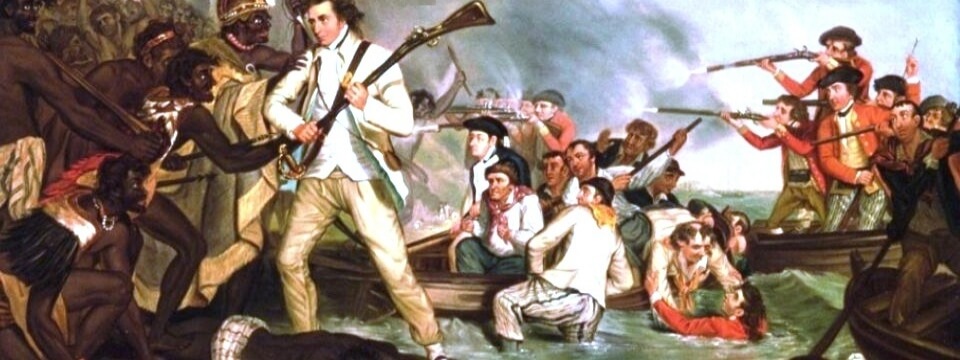
Cook’s last violent outburst ultimately led to his death. When responding to further theft, he ordered his crew to open fire on Hawaiians before attempting to capture their king, ultimately resulting in his own death during the ensuing struggle. We may never know whether they still viewed him as a god at the time of his death—or if they ever had—but some believe they consumed him afterward.
A controversial painting depicting Cook’s last stand debunked earlier tales of him calling for an end to violence. Based on an eyewitness account, John Cleveley’s watercolor shows him battling for his life against the furious mob, presenting a more human image than that of a Christ-like martyr.
Celebrity Culture
Following the triumph of his first two voyages, some suggest Cook’s newfound celebrity dulled his judgment. Reports indicate he spent crucial time working on his journals and posing for portraits instead of adequately preparing for his third expedition.
After setting sail, his ship-master, William Bligh—a celebrated navigator in his own right—expressed dismay at moments he deemed reckless. The consequences of this laxity soon became evident, costing lives, including Cook’s own, as miscalculations forced them back to Hawaii.
While historians celebrate Cook’s voyages for expanding human geographical and scientific knowledge, they also initiated European colonization in the Pacific, leading to severe disruptions, displacement, and new diseases for Indigenous populations in Australia, New Zealand, and Hawaii.