


How a Royal Escape Inspired a Forgotten Tradition! Oak Apple Day, a lost British tradition that began in the 17th century, celebrates the remarkable escape of Charles II, who hid in an oak tree during the English Civil War.
This extraordinary tale inspired the establishment of a public holiday commemorating his return to the throne.
The History Behind Oak Apple Day
In the 1640s, the turmoil of the English Civil War led to Parliamentarian forces overthrowing Charles I, who faced execution in January 1649. His son, Charles II, found himself in a precarious situation after his army’s defeat by Oliver Cromwell’s Roundheads at the Battle of Worcester in September 1651. With the monarchy abolished, the regime sought Charles II’s capture.
Defying the odds, Charles eluded his pursuers by taking refuge in an oak tree near Boscobel House. The tree’s dense foliage successfully concealed him from the Roundheads, allowing him to escape to France.
This daring escape became symbolically tied to the oak tree and inspired the Observance of 29th May Act in 1660, establishing Oak Apple Day as a public holiday celebrating Charles’s restoration.
The Mood of the Restoration
Although the government enacted Oak Apple Day, many citizens genuinely welcomed Charles II’s return after years under Oliver Cromwell’s strict Puritan regime, which imposed limits on social activities.
The jubilance of the Restoration era saw the lifting of many restrictions. Celebrations included a revival of theater and public festivities, with fountains flowing with wine—a stark contrast to the austere years before.
Traditional Celebrations of Oak Apple Day
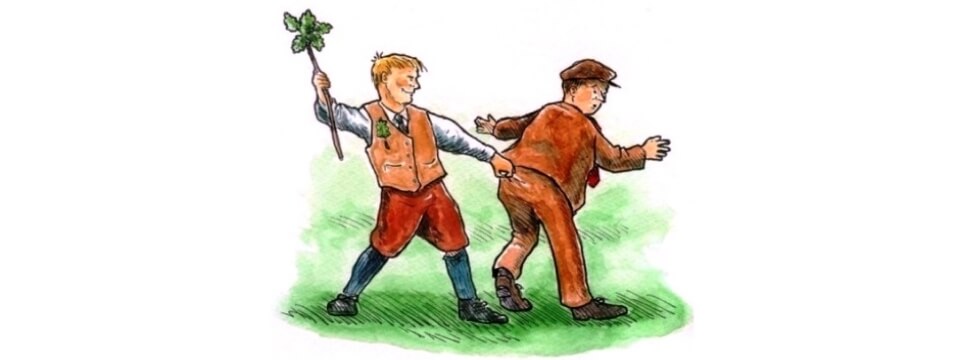
Traditionally, people marked Oak Apple Day on May 29 by wearing “oak apples,” which are actually galls, along with sprigs of oak leaves.
Those who neglected to join in the festivities might face playful jabs from fellow celebrators, including pinching or lightly assaulting them with eggs or nettles. The day also became humorously known as “Pinch-bum Day,” though people still commonly call it “Royal Oak Day.”
Oak Apple Day Today
Although Oak Apple Day ceased being a public holiday in 1859, it is still celebrated in various parts of the UK. One notable observance takes place at the Royal Hospital Chelsea, known as “Founder’s Day,” in honor of Charles II, who established the institution.
In Great Wishford, Wiltshire, locals maintain a medieval tradition of gathering firewood in Grovely Wood on this day. Oak Apple Day, while transformed over the years, continues to hold special significance for communities grateful for Charles II’s legacy.