


The Terracotta Army was discovered by a group of farmers while digging a well.
In 1974, archaeologists made a groundbreaking discovery of the first emperor of China’s Terracotta Army. Yang Zhifa and his five brothers, seeking water during a drought, dug a well near their village in Lingtong County, close to Xi’an in Shaanxi province, China.
On March 29, they unearthed a terracotta head of a warrior and a corroded bronze arrowhead, unknowingly stumbling upon a remarkable archaeological site.
Local archaeologist Zhao Kangmin learned of the farmers’ find and rushed to the site, fearing damage from their continued digging. He found the brothers had scattered many terracotta fragments.
He instructed them to stop and collected the pieces, transporting them to the Lingtong County Museum. After reassembling the fragments, Zhao revealed two impressive figures, indicating a larger discovery.
Recognizing the significance, Zhao led a team to excavate further. As they cleared the soil, more figures surfaced, hinting at the presence of hundreds.
Concerned about how the Beijing authorities might react, especially after the Cultural Revolution’s destruction of cultural heritage, Zhao hesitated to report the discovery. However, a journalist uncovered the story, forcing the issue into the open.
Fortunately, the authorities acknowledged the site’s importance and initiated a full excavation. Soon, archaeologists uncovered an extraordinary terracotta army, created to protect Qin Shi Huang, China’s first emperor, in the afterlife.
Over the following months, workers unearthed four pits containing more than 8,000 figures, complete with horses and chariots.
The first pit revealed 6,000 soldiers in battle formation and a multitude of bronze weaponry. The subsequent pits showcased more infantry and cavalry, high-ranking officers, and elaborate chariots. While the final pit remained empty, the army rested undisturbed for 2,200 years just a kilometer and a half from the emperor’s burial mound.
Each soldier was unique, crafted in government workshops and detailed by hand, with vibrant paint intended to enhance their realism—though much of it flaked away during excavation, raising concerns about preservation techniques.
This discovery marked a significant chapter in archaeological history, showcasing the artistry and ambition of an ancient civilization.
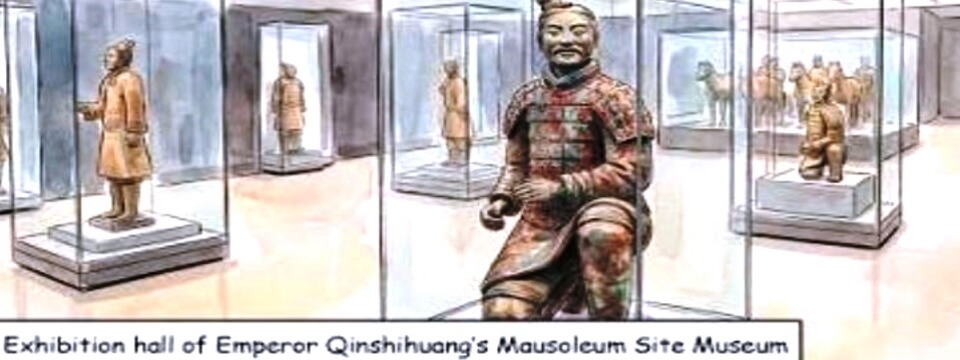
A year after the army’s discovery, the Chinese government opened the site to the public. Workers built a museum and a protective roof over the exposed pits.
Tourists soon flocked to Xi’an, eager to see this incredible sight, and by the 1980s, that trickle of visitors had transformed into a torrent, attracting tourists and dignitaries from around the world.
Unfortunately for Zhao, his role in uncovering the army faded behind the farmer who made the initial discovery. This frustrated him, as he argued that Yang Zhifa and his brothers didn’t comprehend the significance of their find, damaged artifacts, and even stole items to sell on the black market.
Despite Zhao’s protests, Yang Zhifa gained greater recognition both in China and abroad as the discoverer of the army, even receiving a job at the museum’s gift shop from the government.
Zhao passed away on May 16, 2018, at the age of 82, stating that without his intervention, Yang and his brothers could have caused irreparable harm to this significant archaeological site. The debate continues over whether Zhao Kangmin should be remembered as the true discoverer.
The Terracotta Army became a UNESCO World Heritage Site in 1987 and today ranks as one of China’s top tourist attractions. Rarely, groups of soldiers have traveled abroad for display, drawing hundreds of thousands of visitors.
While the Terracotta Army is an extraordinary find, it is just the tip of the iceberg. The mausoleum of Qin Shi Huang remains untouched, and future generations hope to uncover the wonders buried in the tomb of China’s first emperor. Given the breathtaking spectacle of the Terracotta Army, it promises to be an incredible sight.