


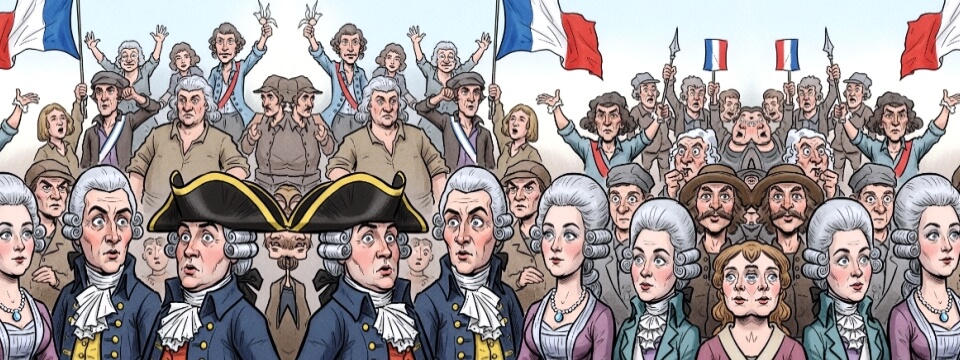
The Revolutionary Tribunal found Marie Antoinette guilty of high treason, conspiring with foreign powers against France, and depleting the national treasury, and they beheaded her during the French Revolution on October 16, 1793.
Marie Antoinette’s beheading by Charles-Henri Sanson, the executioner of the French First Republic, stemmed from a complex interplay of politics, public perception, and historical circumstance, rather than the simplistic narrative of her being an out-of-touch queen.
While revolutionaries painted her as the epitome of the ancient regime’s excesses, many modern historians view her as a tragic figure caught in the tumult of a revolutionary era.
Marie Antoinette’s early life
Born Maria Antonia in 1755, she grew up in a powerful Hapsburg family in Austria. Her marriage to Louis XVI in 1770 was intended to solidify the alliance between France and Austria, enemies historically. However, this connection fueled suspicions among the French populace, who viewed her with skepticism and hostility.
Assimilation into French culture
Initially, Marie Antoinette struggled to assimilate into French culture, symbolized by her name change. Despite her efforts to adopt French customs, her reputation suffered due to pervasive gossip regarding her personal life, especially concerning the delay in consummating her marriage—a rumor that tarnished her image.
As financial turmoil gripped France in the late 1780s, the monarchy faced blame for the nation’s woes. Many unjustly attributed the country’s economic struggles to Marie Antoinette’s spending, despite evidence suggesting that Louis XVI’s fiscal policies, particularly funding the American Revolution, were at fault.
The effect of French Revolution
When the French Revolution erupted in 1789, Marie Antoinette sought assistance from her Austrian family, which revolutionaries later twisted into accusations of treason. In October 1793, a trial found her guilty, leading to her execution—an event shrouded in public spectacle and historical distortion.
Historians now challenge many negative portrayals, including the infamous “Let them eat cake,” which likely never originated from her. Misrepresentation defined her legacy, illustrating how misinformation can lead to catastrophic outcomes.