


This ancient Greek conflict begins when Paris, the Trojan prince, elopes with Helen, wife of Menelaus, king of Sparta, igniting a fierce quest for revenge.
Menelaus enlists his brother Agamemnon, king of Mycenae, who unites a massive coalition of Greek city-states against Troy. The conflict spans ten years, marked by battles and divine interventions, with gods and goddesses taking sides.
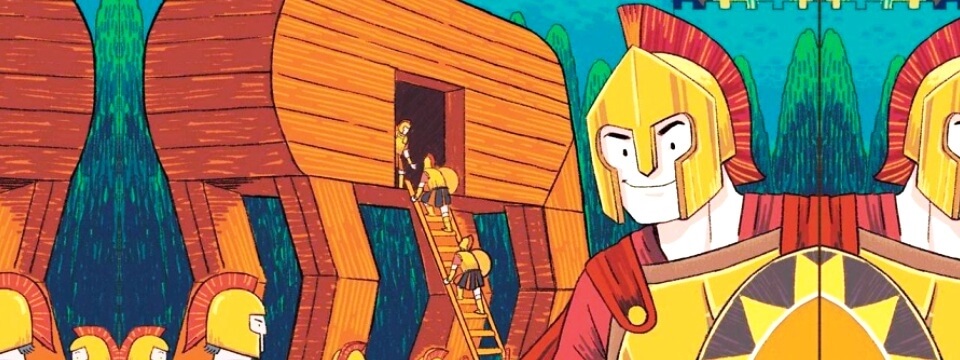
The clever ruse leading to Troy’s downfall is the wooden horse. Greek soldiers hide inside, and when the Trojans bring it into the city, they launch a surprise attack, resulting in Troy’s destruction.
Once deemed purely mythical, archaeological discoveries have suggested the existence of Troy and a possible corresponding conflict, merging legend with historical fact.
The Trojan War illustrates themes of love, honor, and the tragic consequences of pride and vengeance, resonating through art, literature, and popular culture across generations.
Myth, history, and the rich culture of ancient Greece weave the saga of the Trojan War. While scholars debate its exact veracity, they trace its roots back to oral traditions and historical events, likely fueled by the conflicts among Aegean civilizations.
Origins in the Bronze Age
The legendary war is anchored in the Late Bronze Age, around the early 12th century BC, against a backdrop of flourishing trade and city-state rivalry. The city of Troy, located in present-day northwestern Turkey, became the epicenter of this tale.
Homer’s Influence
Homer’s ‘Iliad‘, penned in the 8th century BC, immortalized the Trojan War through a blend of historical elements and divine intrigue. Though written centuries after the events, his work drew from a rich oral storytelling tradition that conveyed tales of heroism and conflict.
Lost Narratives of the Epic Cycle
In addition to the ‘Iliad’, other ancient poems of the ‘Epic Cycle’ further elaborated the Trojan War narrative, though many texts have been lost. Fragments remain in works like Homer’s ‘Odyssey’, which follows Odysseus’s harrowing journey home from Troy, enriching the legend.
Cultural Significance
The allure of the Trojan War lies in its timeless themes of love, betrayal, and fate, epitomized by figures like Helen, Paris, Achilles, and Odysseus. The war symbolizes the complexities of human experience, resonating through the ages and influencing art, literature, and philosophy.
Ancient and Classical Views
Initially, the Trojan War was viewed as both a historical event and a foundational myth. Ancient Greek poets like Homer chronicled it in epic tales, embedding it in the cultural memory of Greece. The Romans further integrated the war into their historical narrative, solidifying its importance.
Eighteenth to Nineteenth Century Reassessment
By the 19th century, scholars shifted their views; they increasingly considered the Trojan War legendary, with skepticism about the accuracy of Homeric texts growing alongside modern archaeological developments.
Archaeological Revelations
Pioneers like Frank Calvert and Heinrich Schliemann changed the narrative when Calvert, convinced that Troy lay beneath Hisarlık, teamed up with Schliemann. Their discovery in the 1870s suggested a real city linked to the epic tales, reigniting interest in the war’s historical dimensions.
Modern Interpretations and Discoveries
In the early 21st century, archaeological finds continue to reshape our understanding. The discovery of a Roman mosaic depicting scenes from the Trojan War in Rutland highlights the enduring legacy of the war. Projects like ‘Digging for Britain’, led by Professor Alice Roberts, reflect a modern fascination with this ancient saga.
Contemporary Perspectives
Today, people view the Trojan War through multiple lenses: as a symbol of human conflict, an inspiration for literature, and a subject of scholarly debate over myth versus reality.
Recent discoveries have underscored its potential historical basis, creating a dynamic discourse that keeps the stories surrounding Troy relevant in our modern world.
Heinrich Schliemann’s excavations at Hisarlık in the 1870s reignited interest in the legendary city of Troy, uncovering multiple layers of ruins that tell stories of destruction and rebirth over centuries. Schliemann identified one layer as the Troy of the Trojan War, but later findings revealed it to be significantly older than he believed.
Despite this error, Schliemann’s discoveries provided evidence aligning with Homeric descriptions, affirming a form of Troy existed. This raises questions: did the legendary Trojan War happen? Traditional narratives depict Paris’s choice among the goddesses leading to a grand conflict, but the mingling of divine influence complicates historical accuracy.
Historians suggest the epics may stem from real military conflicts, supported by the significant destruction at the site. However, whether this damage was due to war or natural disasters like earthquakes remains uncertain. Thus, while Troy’s existence is supported by archaeological evidence, the reality of the Trojan War remains an intriguing blend of legend, history, and myth.