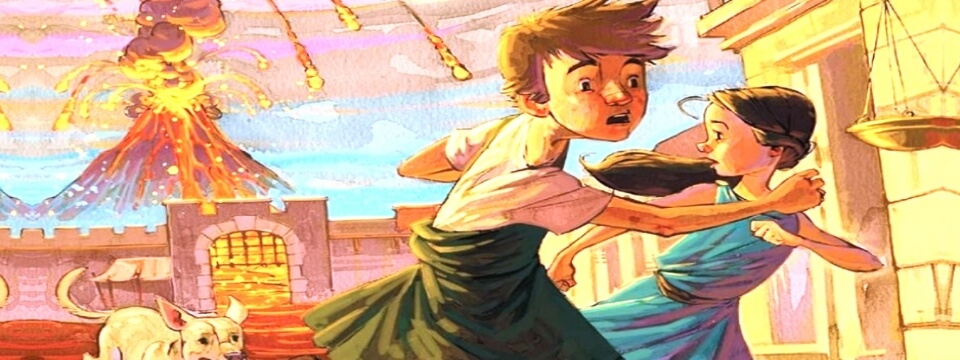
The 15,000 citizens of Pompeii never imagined the cruel fate that awaited their beloved city on that fateful day.
The day had begun like any other in the ancient Roman city of Pompeii. Shops bustled with activity, markets thrived, and citizens gathered in the forum to discuss politics and business.
Despite the earthquake that had rocked the city 17 years earlier, the growing population felt no cause for concern as they pursued their daily lives. Investment money had sparked impressive renovations, and the city had flourished. The future shimmered with promise for this vibrant Roman metropolis.
Yet, the citizens had no inkling of the impending disaster. Nestled in the Bay of Naples in the Campania region of Italy, the locals lived under the watchful eye of Mount Vesuvius, a sleeping giant they recognized as a volcano but believed to be extinct. On August 24, 79 AD, the catastrophic events would shatter that illusion.
The Destruction of Pompeii
For four days before that pivotal moment, small earthquakes rattled the surrounding areas, their frequency increasing. Although the Romans had grown accustomed to seismic activity in the region, those tremors masked a grave warning: the sleeping giant was awakening.
Pliny the Younger, the sole eyewitness to document these events, noted that such minor quakes often occurred in Campania. This time, however, they portended something sinister.
During the eruption of Vesuvius
Every second, one and a half million tons of volcanic debris spewed into the atmosphere. As pressure from the molten rock beneath the volcano built to unbearable levels, Mount Vesuvius erupted violently at 1 PM on August 24.
An enormous black cloud enveloped the blue sky above, the column of volcanic pumice, hot gases, and ash rising nine miles into the atmosphere, spreading across the horizon like black ink on blotting paper. Pliny described its shape as resembling an umbrella pine tree, with a tall trunk branching out.
Every second, one and a half million tons of volcanic debris erupted from the depths of the furious giant, releasing over 100,000 times the thermal energy of the atomic bombs dropped on Hiroshima and Nagasaki during WWII. The dark cloud swiftly traveled the five miles to Pompeii, shrouding the city in darkness as molten rock, pumice, and hot ash rained down.
Some residents fled toward the sea, others into the countryside, while many cowered in their homes, hoping to ride out the storm. The first deaths occurred as the roofs of buildings collapsed under the weight of ash and debris, crushing those within. Rocks plummeting from the sky claimed additional lives. Gradually, ash buried the city to a depth of nearly 10 meters.
When Vesuvius erupted over Herculaneum
Although Herculaneum, a wealthy seaside town just three miles closer to Vesuvius, dodged most of the initial ashfall due to prevailing winds, the devastation that unfolded persuaded many citizens to flee. They proved wise; Vesuvius was far from finished.
Around 1 AM, twelve hours after the volcano’s initial roar, the eruption entered its second and deadliest phase. The column of debris and gas soared to 20 miles high but began to weaken under its own weight. In the early hours of August 25, the column collapsed, as gases densified and could no longer support their solid content. This marked the first of six pyroclastic surges that would ravage the region that day.
The surge raced toward Herculaneum at speeds over 100 mph, instantly killing those caught in its path due to temperatures soaring around 250°C. For years, historians believed that Herculaneum had mostly emptied by the time the surges arrived, given the scant skeletal remains discovered.
However, the 1980s revealed up to 400 well-preserved skeletons in boathouses near the seawall, showing not everyone had evacuated. In the end, Herculaneum lay buried under 75 feet of volcanic material.
It was certain death in a fraction of a second for every living thing in Pompeii at that time.
Day two of the eruption
As the sun rose on the second day of the eruption, ashfall in Pompeii began to ease. Citizens within the city, believing the worst had passed, started to return to their homes and salvage what they could. If volcanic eruptions had an eye of the storm, this was it—a brief, misleading calm before Mount Vesuvius unleashed its fourth pyroclastic surge.
It struck around 7:30 AM, crashing into Pompeii at over 200 mph, with temperatures now exceeding 300°C. This surge guaranteed instant death for all who remained in the city. Even those who had fled to the countryside faced danger, as the surges penetrated deep into the surrounding landscape. A fifth surge buried Pompeii for good.
Pliny the Younger had taken refuge in Misenum, 18 miles from the volcano. Even at that distance, the citizens felt the eruption’s effects, with ash blanketing the Roman port. Initially, Pliny and his mother chose to stay and observe the unfolding chaos.
A few observations by Pliny the Younger
‘On the other side, a black and dreadful cloud, broken with rapid, zigzag flashes, revealed variously shaped masses of flame… Soon afterward, the cloud began to descend and cover the sea.’
Earlier in the day, Pliny’s uncle, Pliny the Elder, had courageously sailed toward the volcano to assist those trapped nearby. Authorities later found his body, likely the result of a heart attack.
As Pliny the Younger witnessed the waters receding, he identified what likely was a mild tsunami triggered by the eruptions. Eventually, he and his mother ventured into the countryside with many others, covering their heads to shield themselves from falling debris.
‘You could hear the shrieks of women, the wailing of infants, and the shouting of men,’ Pliny recalled. ‘People bewailed their fate or that of their loved ones, some praying for death to escape their terror. Many pleaded for the gods’ aid, while others despaired, believing the universe had succumbed to eternal darkness. I found some grim comfort in the belief that the whole world was dying with me and I with it.’
End of the second day
By the end of the second day, sunlight finally broke through the haze, illuminating the scorched landscape below, offering a glimmer of hope to the surviving souls. Mount Vesuvius lay quiet once more.
Though exact numbers remain unknown, estimates suggest the eruption claimed around 13,000-16,000 lives, marking it as one of history’s deadliest volcanic events.
Herculaneum and Pompeii were never rebuilt; they lay buried under ash, dust, and rock, preserved as time capsules.
Following the eruption, Roman looters excavated Pompeii for valuables, but knowledge of Herculaneum and Pompeii faded into obscurity until their rediscoveries in the 18th century.
During 19th-century excavations, Italian archaeologist Giuseppe Fiorelli discovered that the voids he unearthed in the ash layers at Pompeii contained spaces left by decomposed human bodies. He developed the technique of injecting plaster into these voids, vividly capturing the final moments of the people of Pompeii.
Over a thousand casts emerged, each a haunting snapshot.