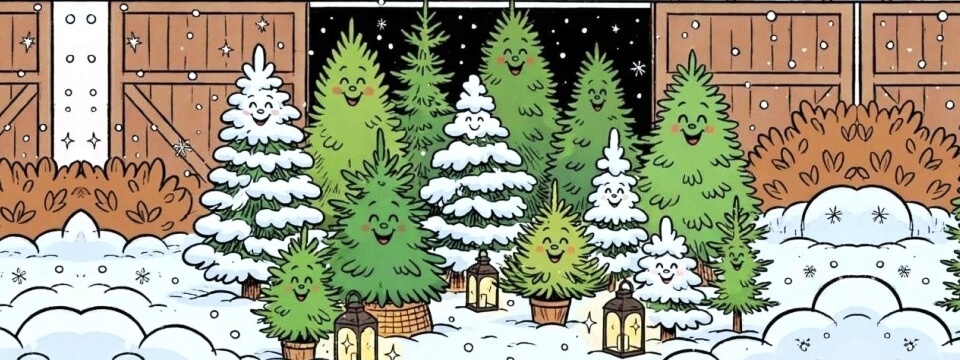
People beautifully decorate Christmas trees, typically using an evergreen conifer such as a fir, spruce, or pine, making it a cherished holiday ritual that fosters a sense of togetherness and joy.
The tree often serves as a canvas for personal expression, with ornaments that carry special significance, reflecting each family’s unique history and values.
They adorn the tree with a variety of decorations, including colorful ornaments, twinkling lights, garlands, and tinsel, that symbolize the Christmas celebration.
Families often gather to decorate the tree, creating a festive focal point in homes around the world.
Ancient roots trace back the practice of using a tree to celebrate the Christmas season to various pagan rituals that honored the winter solstice when people celebrated the return of longer days and the rebirth of nature.
These early customs often involved families bringing greenery into their homes to symbolize life amidst the winter’s cold. Various cultural and religious meanings have also associated the tree with the idea of the Tree of Life in Christianity.
What is its other name? How do people call ‘Christmas trees other than Christmas trees’?
Another common name for the Christmas tree is the “Yule tree.” The term “Yule” originates from the Old Norse word “jól,” which refers to the midwinter festival.
Over time, people made the custom of decorating a Yule tree a part of Christmas celebrations, especially in Europe, where it gained widespread popularity in the 19th century.
Today, families see the Christmas tree as a symbol of joy, hope, and celebration, inviting them to come together, share traditions, and create lasting memories during the holiday season.
What different types of real Christmas trees exist?
Traditionally, various species of evergreen trees adorn homes during the Christmas season. The first Christmas tree, likely a Fir (Abies), emerged in 16th-century North Germany, marking the beginning of this cherished tradition.
As of today, about 25 to 30 million real Christmas trees sell globally each year, reflecting their enduring popularity.
Choosing the best tree for your home depends on multiple factors, including your preferences for aesthetics, scent, size, and maintenance.
Suitable for pets and children
If your top priority is a tree that minimizes needle drop and features soft, rounded needles that are safe for children and pets, consider the Nordmann Fir.
This variety excels in needle retention, meaning you won’t spend your holiday season cleaning up fallen needles.
Its lush, dark green foliage and symmetrical shape make it a favorite for many families. Additionally, the Nordmann Fir has a pleasant aroma, providing a subtle festive scent without being overpowering.
Christmas aroma of pine filling the air
On the other hand, if you desire the classic aroma of pine that fills the air with a traditional Christmas scent, and don’t mind setting up your tree in mid-December to manage needle drop, the Norway Spruce might be the perfect fit for you.
Known for its delightful fragrance and stunning appearance, the Norway Spruce features a classic conical shape and branches that suit hanging ornaments.
Keep in mind, however, that this variety tends to shed its needles more quickly, so it’s essential to water it regularly and monitor its health to prolong its freshness.
Looking for a unique look
For those seeking a unique look, the Fraser Fir stands out with its silvery-blue hue, sturdy branches, and wonderful fragrance.
This variety is particularly popular in the United States and celebrates its excellent needle retention and durable branches, which hold decorations well.
Its gentle and pleasant scent enhances the festive atmosphere and makes it highly sought after during the holiday season.
Seeking something different
If you’re looking for something different, consider the Blue Spruce. With its striking bluish-gray needles and symmetrical shape, it offers a distinctive aesthetic.
This variety boasts strong branches that support heavier ornaments, making it ideal for showcasing your favorite decorations.
However, be aware that its needles can be sharp, so you may need to take extra caution around young children and pets.
An experience with a traditional Christmas tree
Lastly, the Balsam Fir brings a traditional Christmas tree experience with its rich aroma and classic appearance.
Known for its dark green to bluish-green needles, the Balsam Fir often gets used for its fragrant qualities, creating a nostalgic holiday atmosphere.
While this tree retains its needles well, you should keep it well-watered to ensure its longevity throughout the season.
Ultimately, numerous varieties await your choice, each offering unique characteristics and charm.
Whether you prioritize scent, needle retention, appearance, or ease of care, you can find the perfect real Christmas tree to enhance your holiday celebrations.