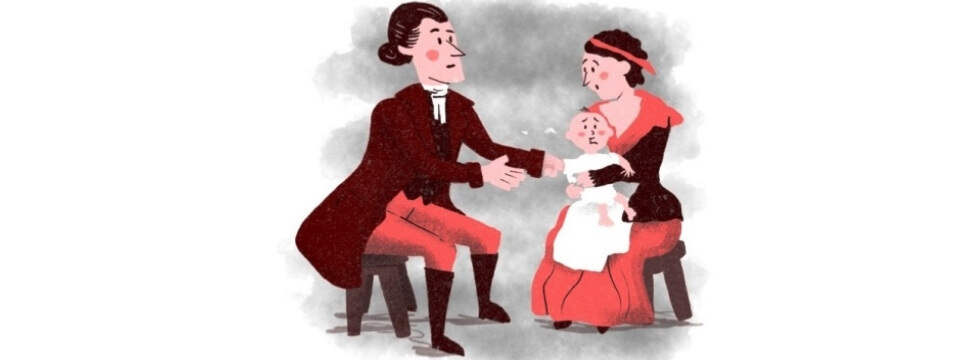
Yes, smallpox had no effect on James Phipps as he became immune to smallpox through a groundbreaking experiment that British physician Edward Jenner conducted in 1796.
At just eight years old, Phipps participated as Jenner’s test subject for the first smallpox vaccine.
Jenner theorized that cowpox, a disease that milkmaids contracted from cows, could provide immunity against smallpox without the severe effects associated with smallpox itself. He decided to test his hypothesis by using cowpox to inoculate Phipps.
Jenner took pus from a milkmaid named Sarah Nelmes, who had recently contracted cowpox, and introduced it into Phipps’ arm through small cuts. Initially, Phipps experienced mild symptoms, such as chills and a slight headache.
After a brief recovery, Jenner inoculated him with smallpox, but to his amazement, Phipps showed no adverse reactions—demonstrating that he had developed immunity.
This pivotal moment not only marked a significant innovation in medical science but also laid the groundwork for vaccination practices that would eventually save countless lives.
Despite the ethical questions that have arisen about this early experiment—particularly regarding informed consent and the risks to a child’s health—the success of Phipps’ case propelled vaccination into the public consciousness.
Jenner promoted his findings vigorously, leading to broader acceptance and further testing of the vaccine.
Over the next twenty years, they inoculated Phipps repeatedly for smallpox to demonstrate his permanent immunity to the disease. During this time, he worked as an assistant gardener to Jenner.
Phipps later maintained a lifelong friendship with Jenner and honored his legacy when he passed away in 1853, as the benefits of vaccination spread far beyond smallpox. Scientists ultimately declared smallpox eradicated in 1980, thanks in part to Jenner’s pioneering work. The eradication of smallpox is one of the most significant events in the 20th Century.
Were There Others Before James?
It’s often said that James Phipps was the very first person to get a vaccine for smallpox using cowpox. However, some other people had actually done similar things before him.
In 1791, a man named Peter Plett from Kiel, which is now in Germany, gave a similar treatment to three children.
Also, in 1774, Benjamin Jesty from Yetminster in Dorset, England, did this for three people in his own family.
But Dr. Jenner’s work was special. He wrote down everything he did with James Phipps. He also included a drawing of Sarah Nelmes’s hand in his book called Inquiry, which came out in 1798. This book was the first time the idea of vaccination was officially published. It also showed how the vaccine could be passed from person to person and how to choose the right material for it.