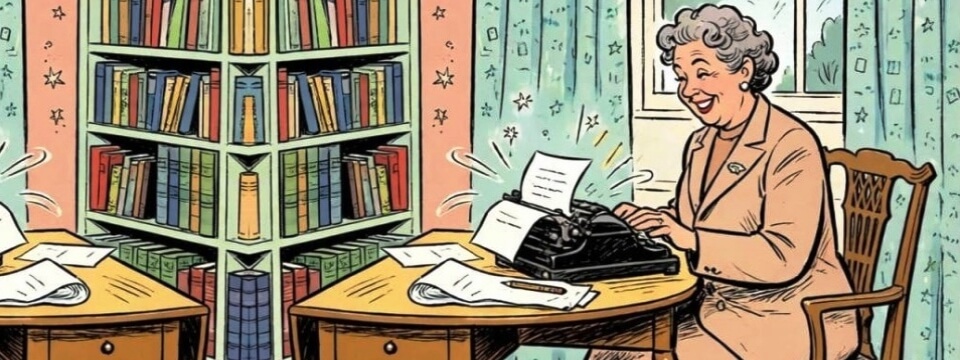
Agatha Christie became famous for so many wonderful reasons!
She transformed the mystery genre with her intriguing plots filled with unexpected twists that kept readers on the edge of their seats.
Her beloved characters, Hercule Poirot and Miss Marple, became cultural icons, charming audiences in their own memorable stories.
With over 60 novels and 14 short story collections, along with numerous plays, her extensive body of work features timeless classics like “Murder on the Orient Express” and “And Then There Were None.”
The talent Christie possessed was remarkable
Christie had a remarkable talent for weaving universal themes of human nature and morality into her tales, which made her stories resonate with readers of all ages.
Then there’s her play “The Mousetrap,” which holds the title for the longest-running play in the West End, cementing her impact on popular culture.
Many have enjoyed adaptations of her works on film, television, and stage, continually introducing her clever mysteries to new audiences around the globe.
Agatha’s journey to fame is as fascinating as her stories. She never attended school, as her mother believed it would harm her intellect, yet she learned history and math from her father.
The Sherlock Holmes series captivated Christie as a teenager
She became enchanted by the Sherlock Holmes series as a teenager and drew inspiration from the novelist Eden Phillpotts, visiting him regularly.
In 1914, Agatha married Lieutenant Archibald Christie. While he fought in World War I, she fulfilled her ambition of becoming a nurse at a Red Cross hospital near Torquay.
Her intelligence and radiant red hair made her a favorite among the soldiers and doctors, and she quickly advanced to a position in the dispensary, where she gained valuable knowledge about drugs and poisons that would later enrich her writing.
Sibling rivalry sparked her first foray into writing when her sister challenged her to craft a detective story with an unpredictable ending. So, Agatha retreated to the picturesque Hay Tor on Dartmoor for three weeks and created “The Mysterious Affair at Styles.”
Drawing from her nursing experiences, she introduced the eccentric Belgian detective Hercule Poirot, who would go on to star in over 40 books, often accompanied by his loyal friend Captain Hastings, whose role was reminiscent of Dr. Watson in the Sherlock Holmes tales.
Miss Marple, another of Agatha’s beloved detectives, made her debut in “The Murder at the Vicarage” and appeared in 12 novels. Under the pseudonym Mary Westmacott, Christie even explored romantic fiction, wrote about her archaeological adventures with her second husband, Sir Max Mallowan, and created several theater scripts, including “The Mousetrap.”
The Mousetrap
When “The Mousetrap” first opened its doors at London’s Ambassadors Theatre on November 25, 1952, it became an instant hit, attracting over 10 million people for more than 20,000 performances!
Originally written for Queen Mary, it debuted as a delightful 30-minute radio play on her 80th birthday in 1947. Set in Monkswell Manor, the play unfolds as guests find themselves snowed in while reports of a killer circulate outside. Mystery and excitement ensue, leading to captivating twists and turns.
Each performance ends with the actor playing the murderer inviting the audience to “keep the secret of the whodunit locked in their heart”—a charming touch that has become a beloved tradition.
Despite receiving mixed reviews at times, “The Mousetrap” continues to delight audiences even today. Christie herself said its allure lies in the way it offers a little bit of suspense, humor, and intrigue, satisfying a wide range of tastes.
After nearly 9,000 shows, the play moved to St. Martin’s Theatre in 1974, where it continues to enchant viewers. Agatha Christie passed away in 1976, but her legacy lives on, welcoming millions into her captivating world of mystery and murder each night.