As its name suggests, the day is one of thanks, as people across America and around the world take stock of everything they have in their lives.
Families gather to celebrate a day of gratitude and togetherness. Often, families reflect on the past year and count any blessings they received.The day also marks the beginning of the holiday season as people begin the official countdown to Christmas and the New Year.
The day dates back to 1621, when the first English settlers, who’d recently arrived on a ship called the Mayflower, shared a three-day feast with Native Americans to celebrate their first successful corn harvest.
The settlers gave thanks to their neighbors who’d helped them learn how to live off the land. Although as history tells us the alliance between the two peoples wouldn’t last, the day marked a rare example of cooperation between the two groups.
Since 1939 when Franklin Roosevelt moved it back a week, Thanksgiving has taken place on the fourth Thursday of November. This year Thanksgiving falls on Thursday 26th November.
It’s that time of the year when roads become filled with travelers heading home for the holiday season as families prepare to gather together to celebrate with one another.
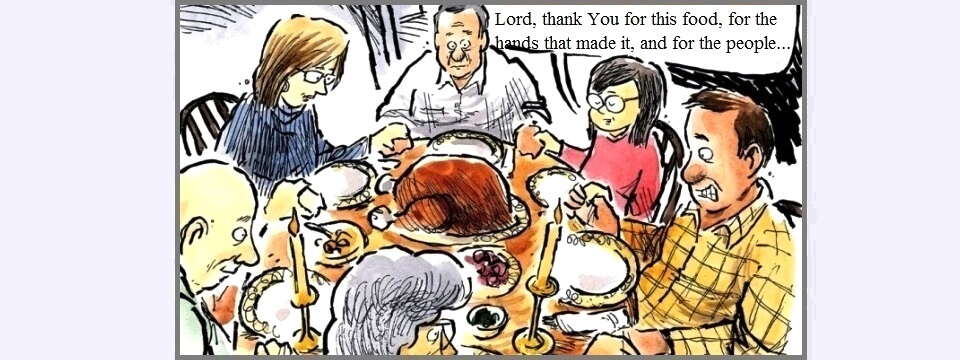
They’ll soon enjoy a large feast with them serving turkey as the centerpiece of the spread. They will pull crackers, overindulgence will be rife, and family members will engage in arguments.
Let us enlighten ourselves with few intriguing facts about Thanksgiving.
National holiday declared by Abraham Lincoln
Thanksgiving didn’t become a national holiday until Old Abe declared it so on 3 October 1863. Before this, each U.S. state scheduled its own Thanksgiving holiday at various times.
Lincoln convinced himself to make the proclamation after receiving a letter from a 74-year-old magazine editor called Sarah Josepha Hale. Hale wrote to various Presidents for over 15 years trying to get the holiday nationalised.
There is nothing better than turkey and marshmallows together
The focal point of the day is the Thanksgiving dinner, a big meal that generally centres on a large roasted turkey. It seems America shares our obsession with turkey as a seasonal holiday dish as around 46 million consume it every Thanksgiving.
That tradition doesn’t, however, go back to 1621, as the pilgrims and Native Americans enjoyed Venison, duck, goose and a variety of fish dishes. Turkey joined the menu during the early 1800s due to its abundance in North America as well as its size, allowing it to feed a whole family.
Just like a good ol’ English roast, the turkey accompanies a multitude of sides including stuffing, mashed potatoes, gravy, cranberry sauce and sweet potato with marshmallows. To finish it off, a traditional pumpkin pie often completes the meal.
The pardoning of a turkey
A turkey is pardoned, whilst many turkeys fail to escape the dinner plate on Thanksgiving, the President of the United States annually allows one lucky feathered friend to wake up on the 26th of November.
The tradition of pardoning a turkey dates back to JFK, who in 1963 famously said, ‘We’ll just let this one grow’ after the National Turkey Federation presented a turkey to him. Other presidents followed suit and in 1989 President George H.W. Bush made the annual White House tradition of pardoning a turkey official.
A race known as a turkey trot is run by people
When it comes to Thanksgiving there is a clear theme running throughout…the turkey. Yet again the plump bald bird has attached itself to an annual American running tradition known as a turkey trot.
Long-distance road-races occur on Thanksgiving morning across America, with millions of participants taking part. The first trot took place over a hundred years ago in 1896 in Buffalo, New York, with just six runners. Only four completed the inaugural 8K cross-country race.
There is no shortage of parades
Dating back to the early 1920s, Thanksgiving Day Parades are quite the spectacle. Growing bigger by the decade, the annual Macy’s Thanksgiving Day Parade in New York City stands as the world’s biggest parade. The spectacles include streams of floats and balloons as well as live music, marching bands and other performers.
It’s not just America that celebrates it
Although its origins are firmly rooted on American soil, Thanksgiving has spread beyond the country’s borders. Canada even claims its Thanksgiving pre-dates the American one by some 40 years.
In 1579, Englishman Martin Frobisher went in search of the fabled Northwest Passage, a sea route between the Atlantic and Pacific Oceans through the Arctic Ocean.
Although he wouldn’t find it, he landed in Newfoundland where he organised a celebration of their safe arrival on North American soil. In Canada, Thanksgiving occurs on the second Monday in October and the traditional meal resembles that in the States.
American-style Thanksgiving has also inspired celebrations of some form or another in a multitude of other countries including Brazil, Grenada, Liberia, Saint Lucia and even a small Australian territory called Norfolk Island.
After Thanksgiving comes Black Friday
The day after Thanksgiving is known as Black Friday, routinely the busiest shopping day of the year as well as the first of the Christmas shopping season in the United States.
Observance of National Day of Mourning
Many Native Americans do not celebrate Thanksgiving as for them it reminds them of the genocide of millions of their people and the theft of Native lands since America first faced colonization by European settlers in the 1600s.
Since 1970, Native Americans have gathered at midday on Thanksgiving on Cole’s Hill in Plymouth, Massachusetts, the site of the first colony by English pilgrims.
There they commemorate a National Day of Mourning to remember the bloody treatment of their ancestors and to protest against the racism and ongoing oppression that Native Americans continue to experience in modern America.