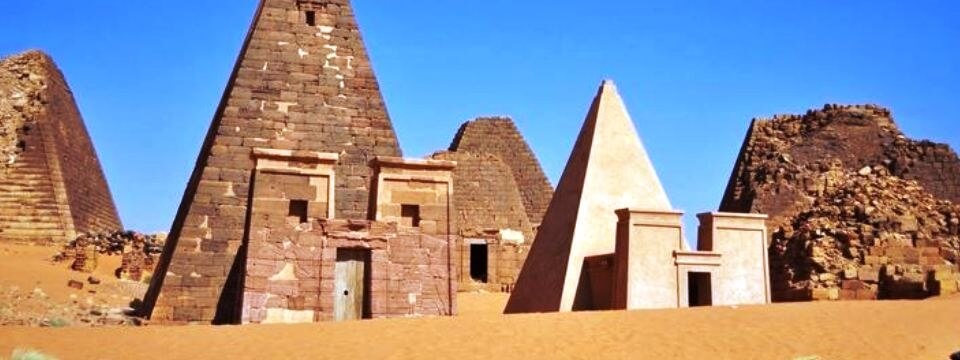
Visually, Sudan’s pyramids differ from their Egyptian counterparts; as they are shorter and narrower, reflecting unique construction techniques.
How Come Sudan Has so Many Pyramids?
Sudan’s impressive collection of over 200 pyramids outnumbers Egypt’s approximately 100, leading to curiosity about their origins. These pyramids are primarily located in Nubia, the ancient region of the Kingdom of Kush, which thrived from around 780 BC to 350 AD.
At its height, Kush covered areas now known as modern Egypt and Sudan and even ruled Egypt during its 25th Dynasty from 744 to 656 BC.
The Kushite rulers, influenced by their northern neighbor, adopted pyramid-building practices to prepare for the afterlife. However, unlike the Egyptian pyramids, which date back to around 2,600 to 2,500 BC, the Nubian pyramids began emerging around the 7th century BC.
Sudan boasts a number of famous pyramids, but which are the best known?
Civil unrest has caused many to overlook Sudan’s pyramids, making the country less accessible to tourists. Nevertheless, prominent sites like El-Kurru, Nuri, Jebel Barkal, and Meroë provide valuable archaeological insights.
El-Kurru, the burial site of the last 25th Dynasty king, Tantamani, features tombs rather than typical burial sites; rulers interred themselves beneath the pyramids instead of inside them.
Nuri became a favored burial location for subsequent Kushite kings, with approximately 20 pyramids, including the largest, that of King Taharqa. Excavations there, conducted by George Reisner in the early 20th century and Pearce Paul Creasman since 2018, reveal ongoing discoveries despite challenges posed by rising groundwater levels.
A desecrated wonder, the Meroë pyramids
Meroë is the largest pyramid site, showcasing the architectural influence from Egypt. It houses the tomb of warrior queen Amanirenas and her successor Amanishaketo, both notable figures in preserving Kushite prosperity.
Sadly, many pyramids there have suffered irreparable damage, particularly due to the actions of treasure hunter Giuseppe Ferlini in the 1830s.
Ultimately, Sudan’s rich history and its impressive pyramid structures underscore the grandeur of the Kingdom of Kush and its cultural connections to ancient Egypt.